
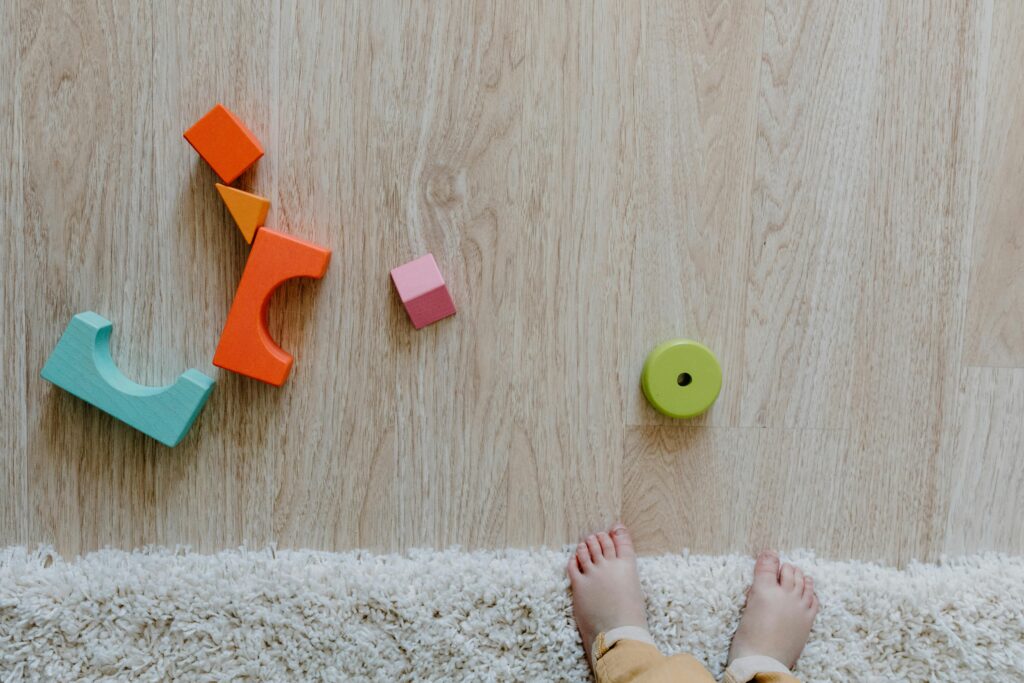
Toddlers are smart and their brains pick up concepts easily. One of the best things to teach your toddlers is shapes. It is an important step for early toddler education. It teaches kids to organize information, visualise and describe the world around them and develop early problem-solving capabilities.
Why Shape Learning Matters
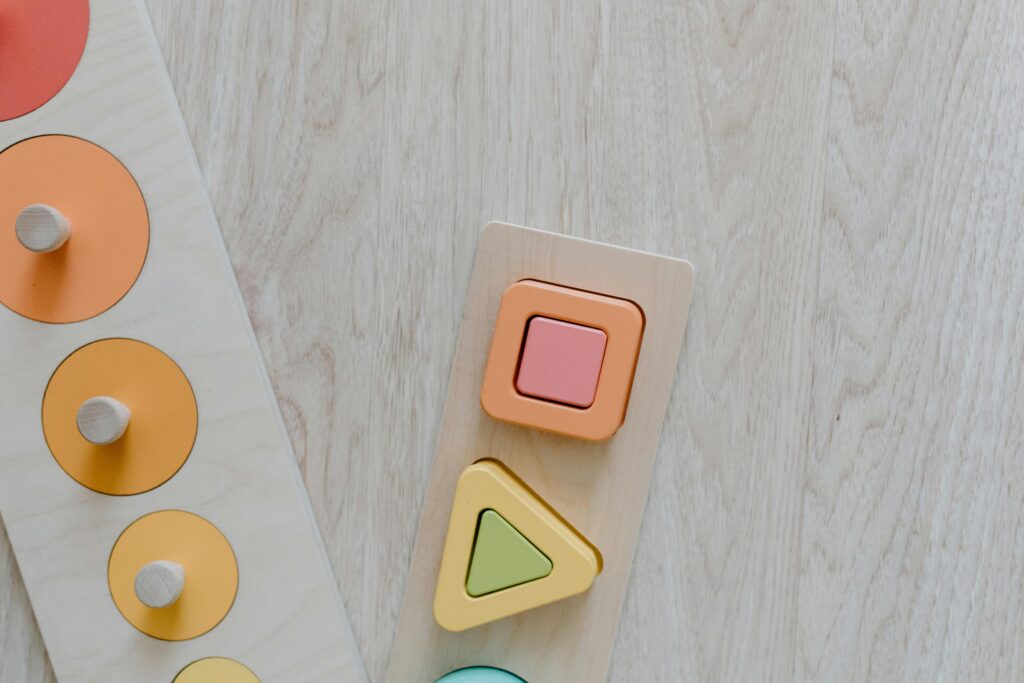
Learning shapes serves as the basis of toddlers’ cognitive development, language growth and everyday skills’ development. This blog is a guide for all parents to explore why teaching shapes actually matters and how they can make learning shapes a fun activity for toddlers.
Cognitive Development Benefits
Early Math & Geometry Foundations
Teaching shapes to toddlers helps build early math skills and lays the foundation for understanding geometry. By learning basic shapes, young children strengthen their problem-solving abilities and develop key concepts they’ll use throughout their educational journey.
Visual Discrimination Skills
These skills allow toddlers to differentiate between things. Understanding how two things are the same or different is an important part of toddlers’ cognitive development. Visual discrimination helps kids in matching socks, recognizing daily objects, completing simple puzzlesand sorting items.
Spatial Awareness Building
Learning shapes early encourages toddlers to carefully observe and accurately interpret visual information around them.
Language & Vocabulary Growth
Naming and Describing Shapes
Toddlers learning to name shapes develop essential vocabulary that boosts their language skills. Early exposure to descriptive vocabulary strengthens both speech development and early literacy skills in our little kids.
Connecting Words to Real Objects
This supports the development of word comprehension, along with improving memory in toddlers. Eventually, learning shapes contributes to important social communication and academic success.
Everyday Life Skills
Recognizing Shapes in the Environment
When toddlers identify shapes around them, like a circle clock, they understand the importance of words representing actual things that are around them. Guide your toddlers in naming the shapes of their toys which will eventually build important observation skills.
Teach Shapes to Toddlers for Early Reading Skills
Learning shapes proves to be effective in early reading skills development. Teach shapes to toddlers to allow them to understand how each shape has a unique form and features. This practice helps them later distinguish between similar-looking letters such as b and d, p and q, or E and F.
When Do Toddlers Recognize Shapes?
12–18 Months
Early Shape Awareness
Kids between 12 to 18 months can be taught early shape awareness.
Simple Shape Matching
Toddlers at this age can do simple shape matching while playing with toys.
18–24 Months
Naming Basic Shapes
Toddlers between 18 to 24 months are capable of naming basic shapes.
Improved Matching Skills
These kids have improved shape recognition and shape-matching skills.
2–3 Years
Recognizing Common Shapes
Toddlers between 2 and 3 years of age are good at recognizing common shapes around them.
Identifying Shapes in Real Objects
Kids at this age can easily identify the shapes of real-world objects around them.
3+ Years
Understanding Shape Attributes
At this age, toddlers learn shape attributes like understanding that a triangle must always have 3 sides and the difference between a square and a circle.
Recognizing Complex Shapes
Kids between 3+ years are well capable of recognizing complex shapes and the differences between them, like an octagon and a pentagon, etc.
Step-by-Step Guide to Teach Shapes To Toddlers
- Start With Basic Shapes
- Circle, Square, Triangle
- Introducing one shape at a time
- Use Real-life Objects
- Household items and toys
- Outdoor shapes
- Use Consistent Naming
- Simple and repetitive language
- Modelling descriptive words for each shape
- Provide Hands-on Exploration
- Touching and manipulating shapes
- Using foam, blocks and cutouts
- Teach Shape Matching
- Side-by-side matching of shapes
- Guided hand assistance
- Teach Shape Sorting
- Starting with two shapes
- Progressing to multiple shapes
- Introduce Tracing and Outlining
- Paper tracing
- Sensory tracing (Sand, Paint, etc.)
- Reinforce Through Repetition
- Short daily practice
- Play-based review
Fun Shape Activities
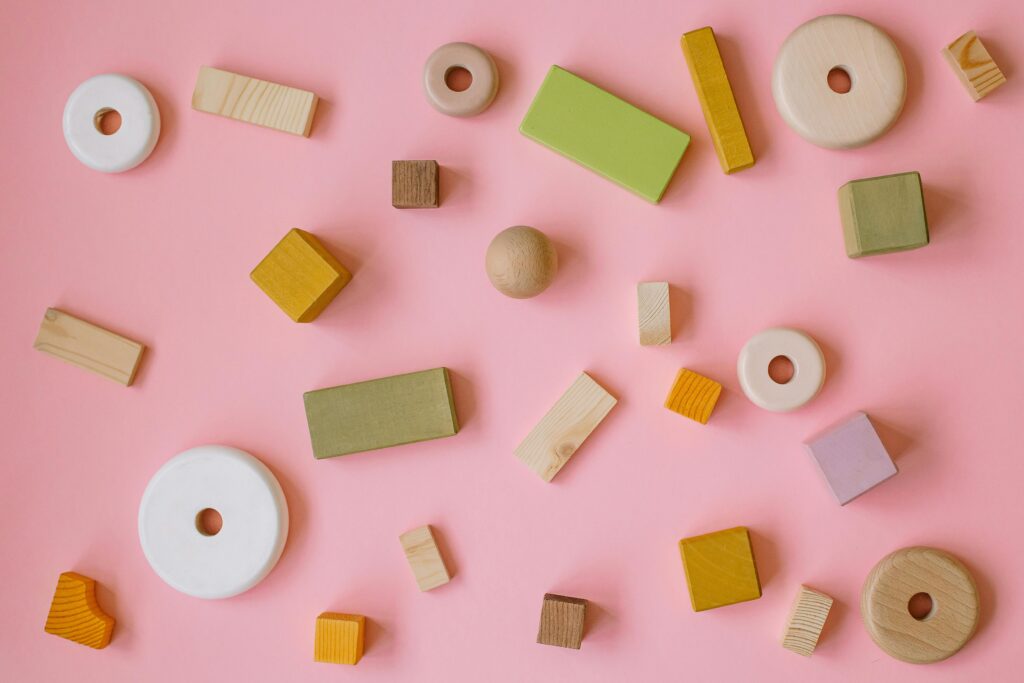
Shape Scavenger Hunt
- Indoor Shape Hunt
- Outdoor Shape Hunt
This requires you to ask your toddlers their favourite shape, or a new shape every day, and find that shape in either an indoor or an outdoor setting. Suppose they choose “Circle”. Now start the game. Whoever finds the most things in that shape wins!
Shape Puzzles
- Simple Insert Puzzles
- Advanced Shape Boards
Depending on the age of your toddler, you can either get Simple Insert Puzzles or Advanced Shape Boards to include in your toddler’s daily play time.
Shape Tracing
- Crayon and Marker Tracing
- Finger Tracing in Sensory Materials
Shape tracing is a fun toddler activity to teach shapes to toddlers. You can use a paper to draw shapes in a dotted form and allow your toddler to trace the shapes. Parents can also set up a sensory finger tracing setup using a ziplock bag and sand or paint inside it.
Daily-Life Shape Learning
- Shapes in foods like pancakes, crackers, fruit shapes, etc.
- Shapes around the home like the windows, tables and décor items.
- Shapes in the outdoors like signs, buildings and in nature.
- Shape-based play and simple crafts like cutting and glueing shapes or creating shape collage activities for toddlers.
You can check our very own ABC game here!
Conclusion — Mistakes to Avoid
Teaching too many shapes at once unnecessarily overloads a toddler’s brain. Expecting quick mastery is incorrect. Allowing toddlers to take time for repetition. Relying only on bookish learning isn’t enough. Toddlers love engaging in hands-on learning. Forgetting real-life practice can slow down the learning. Point shapes in daily life surroundings.
Parents usually start making learning feel like a task. This takes all the fun out of learning for toddlers. Keep it short and playful for your toddlers to stay engaged and active!
World for Toddlers is the first platform dedicated entirely to toddler learning, growth and development—created by parents, with parenting in mind. Our mission is to strengthen the bond between parents and their little ones. With engaging toddler activities, kid-friendly tools and fun games, learning becomes enjoyable for children and peaceful for parents.
Explore the ultimate toddler learning experience here: https://worldfortoddlers.com/toddler-games-tools/
If you want us to build a customize tool for you contact us.

